
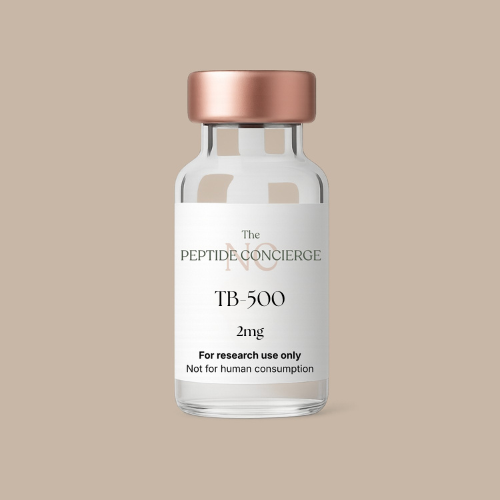

BENEFITS OF TB-500 (THYMOSIN BETA-4)
Synthetic analog of the natural Thymosin Beta-4 protein
Contains 43 amino acids studied for actin-binding properties
Supports research into cell growth, structure, and repair functions
Provides insights into actin regulation and cellular organization
Studied for its potential roles in tissue and biological process research
Useful across molecular biology, peptide science, and cellular studies
Offers a consistent compound for laboratory-controlled experimentation
SCIENTIFIC INSIGHTS INTO TB-500 (THYMOSIN BETA-4)
TB-500 (Thymosin Beta-4) has attracted attention in advanced peptide research because of its structural design and scientific relevance. As a 43-amino-acid synthetic analog, it closely mimics the naturally occurring TB-4 protein, allowing researchers to examine how this peptide interacts with actin in living systems. Actin is one of the most abundant proteins in eukaryotic cells, responsible for cytoskeletal support, cell migration, and intracellular signaling. The ability of TB-500 to bind with actin makes it a strong candidate for studies on cellular motility, structural balance, and the regulation of biological activity. Furthermore, researchers investigate TB-500 to better understand peptide-driven processes related to cellular health, organization, and functional resilience. This combination of molecular precision and biological importance positions TB-500 as a valuable tool for laboratories focused on peptide research and cell biology.
TB-500 (Thymosin Beta-4) (43 aa) functions as a synthetic peptide that mirrors the natural protein present in mammalian cells. Researchers investigate its 43-amino-acid sequence because it interacts with actin, a protein that shapes cell structure, movement, and organization. This interaction makes the compound valuable for research in peptide science, actin regulation, and cell biology.
Scientists prefer TB-500 because it allows them to explore actin-related processes and wider biological functions. Actin provides the backbone of the cytoskeleton, so labs use this peptide to track balance, migration, and stability in cells. These projects give researchers deeper insight into how peptides influence health and resilience at the cellular level.
Each vial carries lyophilized powder, which protects stability during storage and transport. Researchers dissolve the powder into a solution before testing. They store the compound in a cool, dry place away from light. After mixing, they refrigerate it immediately, and for long-term storage, they freeze it at –20 °C to maintain integrity.
The Peptide Concierge NC offers TB-500 at pharmaceutical grade for research and development only. The compound serves laboratory purposes exclusively, not human or animal use. We do not provide dosing information, but laboratories rely on this peptide as a consistent tool for studying peptide activity, actin pathways, and cell organization.
This product is intended for research purposes only. It is not intended for human consumption, medical use, or diagnostic application.